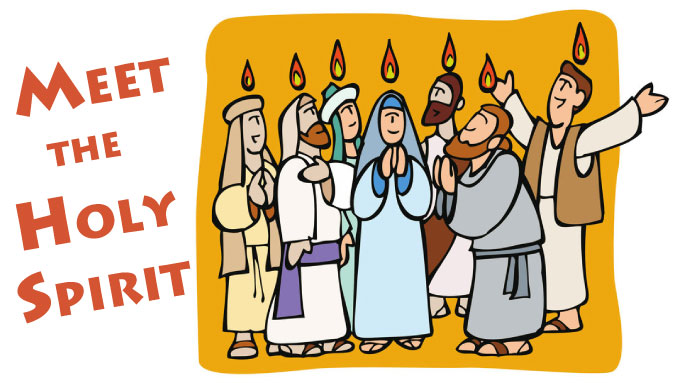
The baptism of the Holy Spirit has been the focus of some unfortunate misunderstanding that has caused many Christians undue stress. Today we'll discover exactly what the baptism of the Holy Spirit is, when it occurs, and what we are to experience as a result of it.
We've learned that the Holy Spirit is a person and that he is divine, a member of the Holy Trinity. In this message we turn from focusing on who the Holy Spirit is in his essential being to who he is to us. We'll learn he is the promised Spirit who has come to dwell in every born-again believer in Jesus. We'll want to discover some of what that means to us, but before that we'll answer a few questions: who does he dwell in, when does he come in to dwell, and how do we know he is dwelling in us?
Our study of the Book of Acts showed us the critical role the Holy Spirit had in the lives of the first believers, and in the explosion of the church. If we are going to see God do in our day what he did in the First Century we are going to need a deep experience with the Holy Spirit as the early believers had. We'll be focusing on getting to know the Holy Spirit and his work in and through us over the next few weeks. Today we'll try to answer the question, "Who or what is the Holy Spirit?" We'll learn that the Bible gives a very clear answer to our question. Understanding the nature of the Holy Spirit helps us understand how we can have a deeper relationship with him.
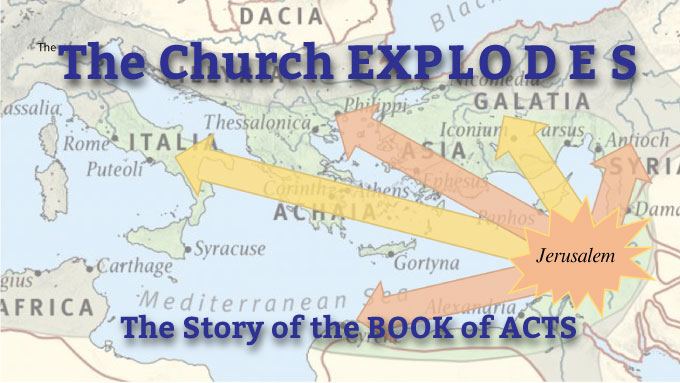
In this concluding message on the explosion of the early church into the Roman empire, we'll hear some good news about the church and its growth today, then look at two simple facts we've learned that would lead us to believe it is God's plan for the explosion of the church to continue. We'll then summarize nine things we've learned about the dynamic behind church explosion from the book of Acts and apply them to ourselves and to the church today.
When they leave Cyprus, God leads Barnabas and Paul to skip evangelizing the coast of Asia Minor to head 100 miles inland to Antioch of Pisidia. There he greatly blesses their message in the synagogue so that virtually the whole city turns out to hear the good news a week later. The Jews resist Paul's work and he turns to the Gentiles who eagerly respond to the good news of forgiveness of sins through faith in Jesus Christ. From Antioch the entire region hears to gospel. We can learn some important missionary methods from what Paul and Barnabas did that will help us as we try to reach people today.
Spontaneous response to opportunities to share the good news has been the primary method God has so far used in the early church to expand the church. In this passage we find God introducing a new method to reach people that spontaneous contacts would not reach. It is what we call missions today, and we'll learn what missions is all about, and the early fruit of the missionary method in this a some subsequent messages. There is application for churches who are passionate about reaching people for Christ in this ancient account.
After a period of rest from persecution, King Herod, seeking to curry favor with the Jews, initiates a new round of persecution of the church. God responds and before this chapter is finished we'll see that Herod is dead and the one he took prisoner in order to kill is alive and free. We see God's sovereignty on display in this chapter, demonstrating to the church that he, not an earthly king, is ultimately in control.
God's leading of Peter to share the good news with a Gentile not only surprised Peter, it surprised the church. In fact, the leaders in the Jerusalem church called him to account for why he'd even entered a Gentile's house, much less preached the gospel to them. Peter carefully explained all God had done to convince him not only to visit a Gentile, but then to baptize those who'd believed in Jesus as a result of preaching the good news to them. Prejudices die hard, but God clearly intends that all people can become followers of Christ without first becoming Jews. The good news is for people of all ethnic and cultural groups, and all nationalities.
It may seem curious to think of the first Christian church arising years after Pentecost, but it is not incorrect. Many years after Pentecost, a great church was born in Antioch of Syria. It was the first largely Gentile church, and it was there that followers of Jesus were first called Christians. The story of how this church began, who was involved, and the quality of the church's life and ministry will all be in focus in this passage. Believers who faithfully share Jesus wherever they can may be part of one of the next great moves of God. We never know, but only by being faithful will that ever happen.
Up until Acts 10, with a single exception, the Christian movement spread only among Jews, and half-Jewish Samaritans. In this chapter we will find Jewish Peter doing something he never imagined himself doing - going into a Gentile's house and preaching the good news about Jesus to him. How this came about reveals God's heart for the other 98% of the world who were not Jewish in the First century, and for those of us today who are not Jews either.
Peace returned to the church in Jerusalem and Judea, allowing Peter to travel freely in Judea. Two of his stops result in him performing mighty miracles that lead many more people to become followers of Jesus Christ. We see that miracles in this period were ways God used to validate the message of salvation through Jesus Christ and give his servants a chance to lift up Jesus and share the good news.
No conversion in the history of the early church was more dramatic or had a greater impact than the one we'll witness in this passage. No conversion demonstrates God's love for sinners and his grace toward them any better than this one. The result of this conversion was that the church's greatest enemy became one of its most effective ambassadors. Should you or anyone else doubt the reality of Christian conversion, this is prime evidence that such things do indeed occur.
Here's another turning point in the expansion of the church brought about by one man who obeyed God's prompting. A new nation was reached because a layman immediately did what God told him to do.
God is still in the business of guiding and directing his people. The question is, what do we do when we sense his guidance? Do we think it over or perhaps dismiss it as crazy, or do we take the first step to obey his prompting? How much God gets to do through us is largely determined by how we respond to his leadership.
Up until this point in the history of the early church everything has happened in Jerusalem. How God got his church out of Jerusalem, who he used to spread it outside that city, and where the expansion first occurred might be surprising. This is the beginning of an exciting new period in the history of the church and it begins in an unlikely place.
So far as we've studied the explosion of the church in Jerusalem, we've seen the movement was led by the apostles. We come to a turning point in God's plan for church explosion as we encounter the first account of the witness of someone other than an apostle. His name is Stephen, and when we first met him he was chosen to help serve the widows in the church making sure all were treated equally. Now we find him sharing the gospel so effectively, that all his enemies can do is try to get the Jewish government involved in trying to shut him up. The courage and calm he demonstrated in the face of their anger and mistreatment remind us of the way Jesus responded to his enemies, and show us how the Holy Spirit within us can overcome our fears and emotions to allow us to be a faithful witness for Christ.
The apostles have been busy people. Preaching, healing, baptizing, discipling, praying, overseeing the gifts given to the church, and, no doubt, doing many other things. How much more could they do without the church suffering from leadership overload? A new problem arose in the church that proved to be a defining moment for the church's leaders. What the leaders decided to do and how the church responded allowed the church to keep growing and be healthy at the same time. It's a model with meaning for the church today.